Watch this informational video (above) to learn more about our organization and campaigns past, present, and future.
Our current campaign issues include the prevention of the destruction of Kennedy Plaza, expanding transit across the state, implementing the Transit Master Plan, and ensuring that amenities like bathrooms and waiting areas are available at each hub.
Join us
If you share our goals, become a member of RI Transit Riders by signing up for our listserv by emailing ritransitriders@gmail.com and/or subscribing to our Facebook group, and following us on Twitter.
Becoming a member means:
Strength in Numbers: When riders speak together, our voices cannot be ignored. By becoming a member, you are strengthening RITR’s call to preserve, expand, and improve public transit in Rhode Island.
Being Heard: RITR is a place for riders to tell decision makers what we need from our public transit. Through surveys, public meetings, and conversations between riders, you’ll get to voice your transit needs, and you’ll be heard.
Staying Informed: RITR will use our member contact list to share important transit news, updates on our advocacy campaigns, and opportunities for you to take action in support of better transit.
Working Group
Any general members who have the time to devote to the work of the organization and can regularly attend Working Group meetings are welcome to join the Working Group as voting members. Regular meetings are generally held on the 3rd Monday of the month at 5:00 p.m. and at other times as needed.
We are a non-hierarchical, consensus-driven organization. Our current working group includes:
-
Patricia Raub (Co-Coordinator)
-
Amy Glidden (Co-Coordinator)
-
James Celenza
-
John Flaherty
-
Rochelle Lee
-
Susan Marcus
-
Randall Rose
-
Liza Burkin
-
Barry Schiller
-
Tom Sgouros
Roles within the Working Group
The Working Group consists of a chair, or co-chairs, who schedules and facilitates the meetings and generally serve as the public spokespeople for the organization; a secretary, who drafts most letters to public officials and maintains a list of the terms of working group officers and records of any revenues and expenditures; an email administrator; one or more social media liaisons, who maintain our presence on Facebook, Instagram, Twitter, and other social media; and a Data and Archive Manager.
Working Group members may carry out a number of RITR tasks including advocacy with members of the General Assembly, maintaining communication with officials, representing RITR at RIPTA Board meetings, and attending and gathering information at other transit-related meetings.
RITR Chair(s) are nominated by Working Group members and appointed by consensus. Terms are three (3) years and may be renewed.
RITR Committees
Going forward, there shall be committees, chaired by a Working Group member, to shape policy recommendations and grow RITR’s influence with decision makers. Committee membership may include other coalition members. Committees shall include:
Communications and Coalition-building Committee
● Coordinate outreach to new groups and individuals
● Maintain regular contact with non-Working Group members, maintains an archive of our meeting notes, public statements, letters, media coverage, and other documents on an on-line storage platform.
● Ensure that RITR Working Group is aware of concerns of non-Working Group members and allied organizations such as KP Resilience Coalition, Providence Streets Coalition, the RI Environment Council, and the Railroad Passengers Association, etc.
● Coordinate messaging
● Select social media liaison(s)
● Maintain RITR website
Policy & Advocacy Committee
● Develop and present to the Working Group for its consideration recommended transit policy at the state, local and federal level
● Ensure that RITR policy recommendations are understood within the larger policy context
● Monitor state and federal legislation and policy related to transit
● Coordinate RITR response to legislation
● Undertake research
Decision-Making
The Working Group guides the organization’s strategy development, establishes work plans to implement the strategy, and finds resources to support the strategies. The Working Group welcomes proposals and suggestions from any member in the organization. The Working Group strives to reach consensus in all decision making. Voting will be used upon occasion when consensus is not possible and resolution is desirable. No policy will be adopted without its having received support from nearly all of the Working Group members. Because RI Transit Riders must speak with one voice on policy issues, Working Group members who cannot support our policies should speak with our coordinators.
For more information about RI Transit Riders, contact the organization’s co-chairs at ritransitriders@gmail.com
History and Mission
Welcome to RI Transit Riders (formerly known as the RIPTA Riders Alliance)!
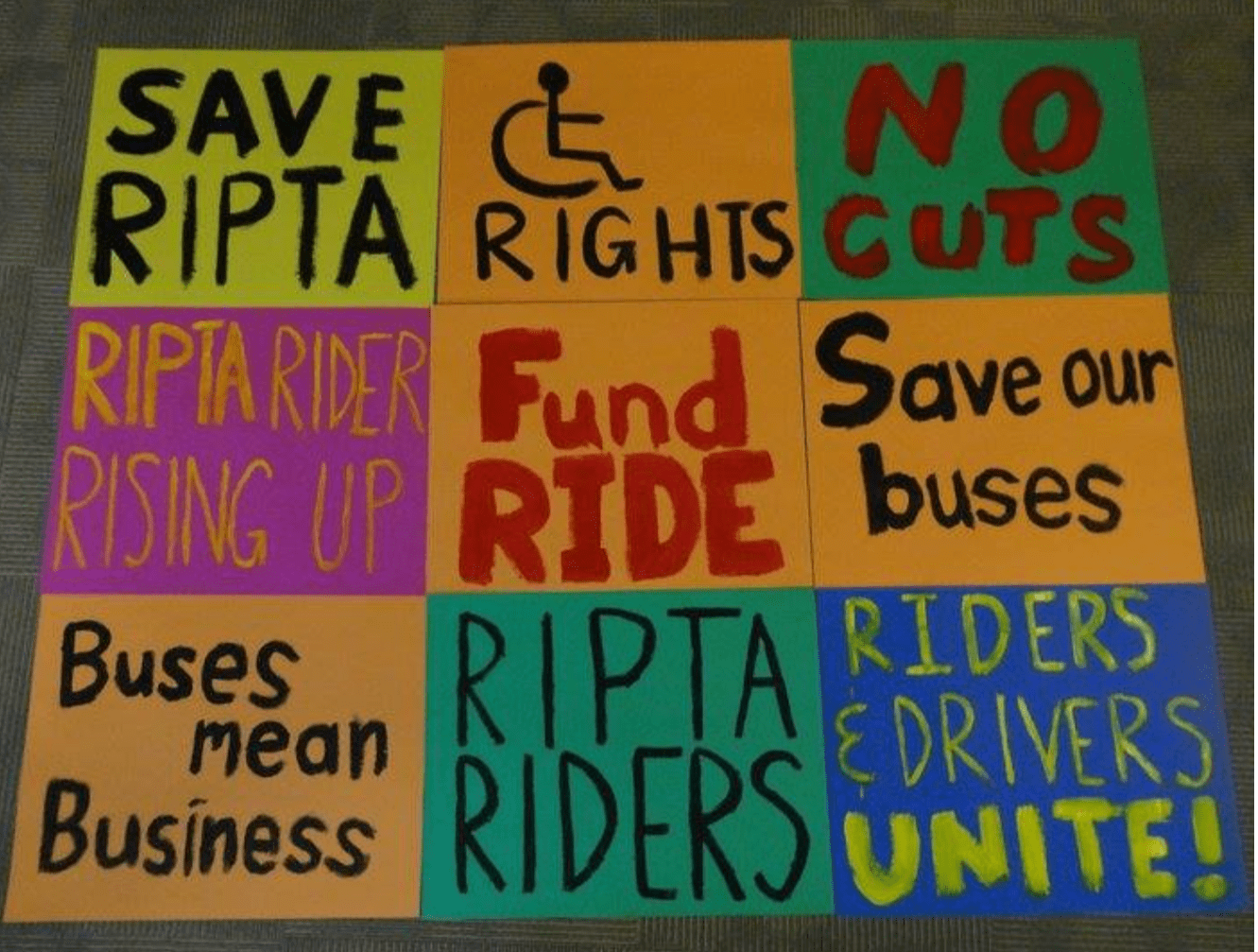
We are an independent, volunteer-led, grassroots group that was formed to preserve, expand, and improve public transportation in Rhode Island. We have been working on transit issues since 2010, when members of the social justice and environmental communities came together to form the group. We have successfully fought to stop fare hikes, secure more funding for RIPTA, and to restore the no-fare bus pass for seniors and those with disabilities.
Vision
RITR believes that a high-quality public transportation system plays an outsized role in enhancing our state’s economy, reducing climate changing emissions and affording most Rhode Islanders safe, affordable, and dependable access to their community’s opportunities for work, education, and all of life’s essentials, while reducing existing equity gaps in our overall transportation system.
Goals
● With a bold new vision and Transit Master Plan (TMP) publicly vetted and adopted by state officials in December 2020, a leading goal is to ensure adequate funding to support the TMP’s swift implementation and support its operation thereafter.
● As the TMP is being implemented, we seek to prioritize early actions, such as increased service frequency, hours of operation, passenger amenities, etc., that benefit existing riders who are most dependent on public transportation and/or residents who are negatively impacted by poor air quality before serving new areas.
● We will watch-dog and advocate for rider interests and equity as transit projects are implemented, such as the Dorrance Street Transit Center, the Pawtucket / Central Falls Train Station & Bus Hub, commuter and intercity rail system, commuter rail electrification, fare-free pilots, etc.
● Since tailpipe emissions are the leading cause of climate changing pollution, we will work to ensure that state leaders understand the role that high-quality public transportation plays in meeting the emission reduction mandates of the Act on Climate.
● We will advocate for transit-related projects throughout the State, including implementation of the state’s new Bicycle Mobility Plan, Complete Streets initiatives, the siting of new and affordable housing located in close proximity to transit, and mixed-use development.
 Rhode Island Transit Riders